
What Working With Alex Hormozi Actually Taught Me
Hosted by Mike DeHaan, Dan Austin, Dylan Koch
 ▶ Watch this episode on YouTube
In this episode
Mike DeHaan recaps a year of consulting with Alex Hormozi's acquisition.com team and explains why Collecting Keys is pausing its Friday Focus episodes. He walks through the $5,000 scaling workshop and the $15,000 level-two program, the math that convinced him and Dan to shut down their franchise, partnership program and marketing company, and the two scaling paths acquisition.com laid out for their wholesaling business.
Key takeaways
- The Friday Focus episodes are on pause; the Tuesday show with Mike, Dan and Dylan continues, and listeners can DM topic requests to @mike_invest on Instagram.
- Acquisition.com's model is to teach business owners for a fee, then identify the best performers as potential acquisitions — the $5k scaling workshop upsells into a ~$15k level two with direct consulting.
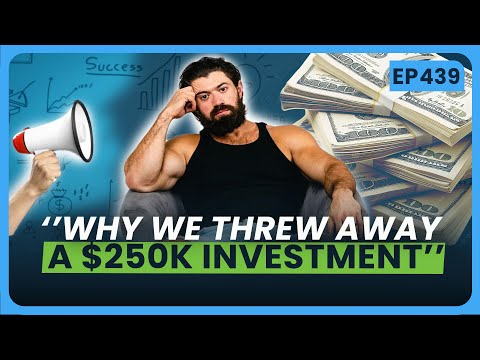
- A forecast showed that standing up their own wholesale operation in about four markets would equal the income of 80 franchises, which led Mike and Dan to write off over $250,000 invested in the franchise and ad spend and refocus on Backyard Home Buyers.
- Acquisition.com likes wholesaling for its high return on ad spend (Mike's is about 7x) but dislikes flipping as low velocity of money with physical, market and liability risk for only $40–50k.
- The two scaling options given: dominate one market with every channel (which gets more wasteful per lead over time), or perfect one marketing system and copy-paste it into new markets (which makes disposition and local knowledge the hard part).
- A major recommendation was building and nurturing a buyers list so you become the preferred deal source — being in front of buyers the moment they're ready for their next purchase.
- The biggest value wasn't new information but hearing known ideas framed with authority by seasoned operators, which made big decisions easier and reduced shiny object syndrome.
Show notes
Big changes have been happening in the market and our business. In this episode, Mike explains why we're taking a break from Friday Focus episodes and how the first year working with Alex Hormozi’s Acquisition.com team changed our business. We share the advice that led us to shut down multiple ventures, change our view on flips, and focus on what actually drives growth. Tune in to hear how we're simplifying to scale more!
Learn more about the Collecting Keys SCALE Community! https://collectingkeys.com/scale/
Check out the FREE Collecting Keys “Invest Anywhere” Guide to learn how to find deals in ANY MARKET Completely virtually (this is how we scaled to over a dozen markets)!
Frequently asked questions
How much does the Alex Hormozi acquisition.com workshop cost?
Mike paid $5,000 for the two-day scaling workshop in Las Vegas and $15,000 for the level-two program, which included two more workshops plus direct consulting with one of acquisition.com's leaders. With flights and travel, the level two ran closer to $20,000.
Is the Hormozi scaling workshop worth it for real estate investors?
Mike says yes for the scaling workshop if you value actionable business education, but the level two is better suited for someone already in a CEO role trying to scale. Much of their expertise centers on online marketing and high-conversation sales businesses, which translates imperfectly to wholesaling's fewer, higher-value conversations.
Why did Collecting Keys shut down its franchise and partnership program?
A consultant mathematically compared the franchise plan to simply scaling their own wholesaling and flipping business, and found four of their own markets would produce the same income as 80 franchises. Mike decided babysitting 80 franchisees wasn't worth it and refocused everything on the local business.
Scaling a Real Estate BusinessWholesalingGuru Watch
Transcript
Read the full transcript
Mike DeHaan: [0:00] What's going on, guys? Welcome to today's collecting keys Friday focus. If this is your first time here, my name is Mike DeHaan, and I am the primary host of the collecting keys real estate investing podcast. These Friday episodes, what we normally do is we dive into a question from a listener or a topic that we've kind of been thinking about over the last, like, week or week and a bit. And for the sake of this episode, what I'm going to be doing is diving into my experience working with Alex Tremozzi and acquisition.com as I just wrapped up my year long consulting session with them last week while I was in Las Vegas. And yeah. So I'm gonna dive into that a little bit. But first off, just in terms of the Friday focuses, this is going to be our last one of these that we do for a little while. Primarily just because, you know, we've been doing these, like, multi week episodes for a long time, for many, many years. I think when we first started the show back in October 2021, we did one show a week for, like, a year, then we added on interviews, then we added on these Friday episodes to basically just bring more listenership and more downloads and everything to the platform. After having done them for so long, honestly, we kinda, like, run out of stuff to talk about. And as we've gotten busier and busier with our real estate business, which is our primary focus, these ultimately turn into something that we are kind of, like, rushing to squeeze in. Like, I can't tell you how many of these I've done in, like, a random hotel somewhere or, like, in a super inconvenient location just because we needed to get it in and check the box. And so just to kind of ease that burden and to not continue to produce, I don't know, content that we're not as excited about, we're just gonna be taking a little pause from these for a little bit. So what I would prefer happen is if you guys had a topic that you wanted me to dive into on, like, more monologue style episode, go ahead and just send me a DM on Instagram, mike underscore invest, and just say, hey.
Mike DeHaan: [1:53] I would love a short episode on this topic, and then we can talk about it on the main show, or I can create one of these kind of just like a bonus episode for you guys. But yeah. So just a little announcement there for that. The Tuesday episodes with me, Dan, and Dylan, and sometimes a guest will continue as we have been going. Those are really fun. Those are also very easy for do us to do with the production team. And honestly, they're just a great excuse for Dan and I to just BS about stuff and talk to Dylan, who's become one of my really good friends. And so we'll keep doing that for a while. No changes there. We're just gonna be going down to one episode a week for a little bit. Alright. So regarding my time at Hermosy's office down in Las Vegas. First off, if you're unfamiliar with Alex Hermosy, I don't know. You're new to small business, I guess, go and look up his name. It's h o r m o z I. He's kinda like the biggest small business influencer out there right now. He owns acquisition.com. It's a private equity company. Even if you've never heard his name before, I guarantee you that you have seen his content on different Instagram reels or things like that because he's everywhere. He has a great podcast called The Game, and I'm a very big fan of his.
Mike DeHaan: [2:55] I quote him a lot on the show. I use a lot of his methodologies in my business. I heavily credit his teachings and kind of the stuff that he preaches for a lot of the success I've had over the past couple of years as the market's gotten weird. And about a year ago, they started doing these workshops at their office, which I was one of the first people to apply for. And I went to the initial one over like a year ago, and I've been working with them now for the past almost twelve full months, and it's been a really good experience. And so high level, basically, how their sort of workshops work. They have their scaling workshop that they talk about on their podcast very heavily. It's like $5,000. That's what I paid for. I think it's still a lot to go to it. You go to these things down in Las Vegas. It's like two days. It's kinda like general business stuff. I got a lot of value when I went to mine. I've heard people have more mixed things about it because if it's like too general. And you go to there's, like, a 100 people. Alex and his wife, Laila, they come and they speak and you get to meet them. And there's, like it's, like, I don't know. I would say 70% educational content and 30%, like, fanfare that you get to see their office and meet Alex and Layla. Right?
Mike DeHaan: [4:01] There's definitely people that 100% went there just for that reason. But at the end of that, they upsell everyone to a level two, which I know is kind of like guru one zero one, bad bad. But I will say that the way that they lead with value makes it very worthwhile to participate in that upsell if you're you are trying to grow your business. And so I bought into that. We paid $15,000 for it. And basically, what it came with was two more workshops that were down there, and then a direct regular consultation with one of the leaders in their company. Basically, work with you to analyze your company's constraints. They figure out who in their office is going to pair best with figuring out your constraints. You connect with that person, and then you go down there for two additional sessions where you essentially create an entire game plan to figure out what you're gonna do for your business to grow it. And kinda like the whole thesis with the entire thing is that the companies that they have acquired as a private equity company, the ones that typically perform the best are the ones that they helped before they acquired them, usually through personal relationships. And so their thought was, what if instead of, you know, putting in this free time or working in this funnel that you're kinda trying to pay for to get people to inquire about being inquired by them. Right? They said, what if people just paid us? We taught them to be better business owners, and then we could identify the people that come through the funnel that way that are of interest to us, and then we could approach them. And they will hopefully become in and be a better portfolio company for them because they already have crafted them with their systems that they do internal.
Mike DeHaan: [5:34] K? It's a pretty brilliant model, honestly. They are making a lot of money with it. Like, if you look at the average person, but if you look at the size of their overall company, it is a relatively small line item. And I will say in now my three sessions down there and the year that I've been going down there, I have seen the reinvestment that they've done and the way that they've stepped up the game over those three sessions. They're doing some really great stuff. But what they do in this this level two, they call it, is they consult you as if you were a portfolio company, and they kind of guide you in the way that they would want you to do it if they were a part owner in your business. So kinda gets in the weeds. It's very, very data driven. And when it comes to real estate wholesaling, a lot of the stuff that they do that they talk about is kind of I I would honestly say hard to apply just because a lot of their expertise revolves around online marketing, running a traditional kind of like sales business, right, where you are tracking the people that show up to your calls, very high conversation rates on businesses. And then when it comes to real estate wholesaling or flipping, that's a little bit different. Right? We're mostly hunting whales. It's fewer conversations, higher cost per lead, higher cost per conversion. But the thing that they do like about wholesaling is it is very, very profitable compared to someone that's selling widgets.
Mike DeHaan: [6:46] Right? And so just take that with a grain of salt if you do go and delve into any of their content or you do any of their workshops. When it comes to these real estate direct to sell businesses, it is a little bit more, I would say, like, fringe, but there is a lot of stuff that is applicable, especially if you are a business owner who's trying to grow. And so over my sessions with them, when I first started going, a lot of my focus was around growing collecting keys and our scale community. And at that point, Dan and I, we were growing a franchise. We had a marketing company. We had all this different stuff that we were doing. And we felt like collecting keys was going to be the top of funnel that was gonna bring things to all these businesses. We had shared team. We're gonna offer all these services. And from kind of the get go, when I went to the first scaling workshop back in June 2024, get a lot of skepticism around that and basically went on, you're doing too much. I did the classic entrepreneur thing, and I was like, ah, you just don't fully understand. I'm smarter than you. I'm in my industry. And so I kind of ignored them. And then when I signed up for the level two, and I went back for my my first session down there that was, like, the deep dive session, which is about so it was in September. So it'd have been about four months after I went to the first one. And they went through mathematically what I was doing and why it was stupid. That was when I really started to realize the value of being around more seasoned entrepreneurs. And so after my first session back down there in September '24, that was when Dan and I actually shut down a lot of the stuff we were working on.
Mike DeHaan: [8:07] You've heard about us talk about this on the show probably, but we shut down our franchise. We shut down our partnership program that we used to talk about. We sold Simply Leads, which was our marketing company, and we kind of stopped promoting scale at such a high level, and instead do it at more of like a referral based thing or, like, just for people who are, like, looking to grow their businesses a little bit more seriously and less like making it a guru mentorship program. And instead decided to focus explicitly on our backyard home buyers wholesaling and flipping business. K? And the reason that we did that was working with my guy that was my connection down there. He mathematically helped me forecast what the financial growth was going to be with, like, comparing what our local wholesaling and flipping business that we are running, what that was gonna produce versus this franchise model and how we were planning to monetize that. And ultimately, the equivalent was gonna be if I stood up my own wholesale business and I think it was four markets that they said, that was gonna be the same as if I had 80 franchises. And it came down to that, would I rather have, you know, forex of my local business, or would I rather have 80 franchises? And that was a pretty easy decision for me to make because babysitting 80 franchisees who don't really know what the hell they're doing did not sound my idea of a good time if that was how little money I was going to make.
Mike DeHaan: [9:22] Big picture. Okay? Not that I make, like, a little bit of money, but it was just a lot more work for a result that was already a lot more achievable that was right in front of me because I have been doing the wholesaling and flipping game for a long time, and I already know how to grow that. And so when I got back from the first one, Dan and I, we made the decision to throw away over a $250,000 of investment that we had made between starting up the franchise and running ads for all the different businesses that we're promoting. And we instead said, we're gonna just end that, and we're gonna shift our entire focus, both monetary and energy towards our local company. And that's what we've done. And so now, within our local backyard homebuyers business has been our focus since, I guess, October of last year. We're exclusively focusing on wholesaling and flipping, and then we have our lending business, which is coming in as basically an additional product for our buyers and for other investors in the space. And those really are more in tangent because you kinda, like, leverage the transactions on both sides to support each other's business, and you're not trying to, like, upsell people on things. K?
Mike DeHaan: [10:22] And they are also very, like, linked just in the way that the pipeline and career comes through, and you're not kinda, like, stretching, trying to sell a buyer that's buying one of wholesale deals on mentorship or on a marketing platform when they don't even know if they want that. But you know that pretty much every buyer that comes in, they need money. K? And so the lending's very easy with that. And so that's what we've been doing for most of the year. And so now going back for my second time this past week, it was a much more constructive conversation because I had a lot more clear direction of what our business was going to look like. And so first off, I got a lot more out of it in terms of just, like, the more general material because I was actually able to prepare effectively because I didn't have 85 things that I was trying to prioritize at the same time at a singular focus. But also to the consultation that I got was very, very specific because we now had one singular focus. And so when it comes to real estate, it's kind of interesting because, like I said, the teachings that they that they kinda do, they focus a lot on, like, online marketing and different things that we don't do a lot of. We do a lot of direct mail.
Mike DeHaan: [11:26] But fundamentally, they do like real estate wholesaling specifically because it is a marketing sales heavy business that does typically have a high return on ad spend. You know, our return on ad spend is about seven x, but they don't like house flipping like at all. Basically, their view on house flipping is that it is a low velocity of money, high risk business that leaves you open to risk in a bunch of different ways. Whether that's like physical risk, like the something you have to the house that's cost you money, whether it's market risk, like the market turning over, you're being able to find a buyer. Right? Whether it's liability risk, like a contractor hurting themselves on-site and suing you. Right? There's so many different ways that a house that can go sideways. And from their perspective, to do all that work and only to make, you know, 40 or $50,000, they're like, why would you ever do that when instead you could wholesale a house? Let somebody else that's kind of an amateur do the flip, and you can make sure less money, but in a much faster time frame with way less risk. K? And so I tend to align with that. If you listen to me at all on this show, you've probably heard me talk about that a lot. And so I did appreciate that we kinda started that way and we moved that way for most of the conversation. When we were going through kind of the ways that they suggested that we scale the business, they basically said there's kind of two options.
Mike DeHaan: [12:41] Right? Which, you know, this will all make sense to you. One is that you get really, really good in a market, and basically try to squeeze as much juice out of the stone as you can. And this is kind of the traditional model that most wholesalers use. This is what our main competitor here does. Right? So you get really good at being the local home buyer. You get an easy option for them, for everyone locally, and you run direct mail. You start it with media advertising. You throw out billboards. Start a local cold calling team. You start running meetups. You get referrals. Right? You become, a very, very strong local brand that everyone knows. You go on the TV. Right? You do all that sort of stuff. And then what you do is you just really try to squeeze as much as you can out of a market. What ultimately tends to happen, and we know I've gone on this path already before, is you spend more money advertising at the same people. Because unless you're in a very large market, you kind of, like, run out of people to advertise to, like, honestly. And so what happens is you start having more and more waste in your marketing system. You start spending more money per lead, more money per deal. And sure, your your revenue and profit continue to grow, it just becomes more inefficient. Right?
Mike DeHaan: [13:44] There's nothing wrong with that model. You can still do very well in making a living, but it comes with just kind of like general challenges with growth and waste, you know. Again, unless you're in like a really large market that has millions and millions of people, which can take a long time to get there. The other option is that you get really good at one type of system or one type of marketing, and you copy and paste that in different places. And so that can be, you know, one marketing system such as direct mail or cold calling or whatever. That can be in terms of, like, one kind of deal. A lot of people were doing this with Sub two back in the day. And you kinda become a little bit more location independent, or at least you focus on a couple specific locations where you can copy and paste what you already know is working in your own market. Right? And so this is very similar to what we try to do with our partnership program, where we were taking this these direct mail strategies and place them in a bunch of different markets, and then we would have a local partner on the ground. And then our whole thing with them was they're paying us basically a fee to work with us, and then we would get a cut of all the deals, and they're responsible for closing things. The challenge with this model is you have to have the local contacts, you have to find the local buyers, You have to keep a touch on the local market and everything else. You have to learn the local market. There's a lot of other challenges with this. So on the local market side, right, if you're trying to grow with that, we're having all these for marketing channels.
Mike DeHaan: [14:59] The challenge becomes that you get a reduction in opportunities, right, for houses. Honestly, you get a reduction in what is realistically the procurement of your product to say on the in a real estate wholesaling company, your customer is your buyer. You've doing the acquisition to find the houses is kind of your procurement of product. It's not that different from, like, going to China to find the best shoe manufacturer. So that becomes a challenge as your procurement becomes tighter. And then if you go to a new market, what becomes a challenge is your disposition becomes harder. Right? Your actual sales. Find the people to be able to monetize or understanding how to best monetize the opportunities that you do find. And so there's no right or wrong answer based on what you decide to do, but it's important just to understand the nuances of those. And so they kind of, like, help line those out and figure out what each of those would look like depending on which one we decide to pursue. I'm not entirely sure which one we're gonna do yet. I do have a idea, but I'm gonna so I'll save that talk about another time as we we kinda decide on that a little bit more formally. But as you're going through that, they were able to kinda financially project what each would look like, what each of our what our org chart would need to look like to do each one, what our systems will need to do would need to look like to do each one, and it was very, very helpful overall conversation. One of the main things that they highly suggested focusing on, which makes a lot of sense as well, is around building as strong of a buyer's list as you can and nurturing buyers so that you become the preferred choice for their source of deals.
Mike DeHaan: [16:24] K? And so they gave me a whole playbook around how to find buyers, how to nurture buyers, how to, like, run, I would say, like, nurturing campaigns and, you know, different marketing with buyers to stay top of mind with them. I got, like, a whole, like, 20, like, little slide playbook around how they suggest that we do that. And it's not unsimilar from having, like, an email list, right, if you have, like, a product. The challenge with it is you don't have something to sell people all the time. But, you know, when it comes to finding buyers for wholesale deals, it's not undifferent from finding sellers where a lot of the business is just being the person that is in front of them when they need to buy another house. Right? When the recent most recent project is sold, when they just accepted an offer on their other one, when they got inspired by something, they decide they're gonna need to buy more property, they wanna scale up. You wanna be the wholesaler that's in front of them that's bringing them the best deals. And so we spent a lot of time kinda talking about that process and what that would look like. So that will definitely become a focus of ours regardless of which direction we decide to go on the acquisition side and the growth side, and that was a big focus. And then the last thing that we spent a lot of time talking about was specifically around the systemization on the sales and the buyer nurturing. And so they have a whole bunch of different processes that they use regarding hiring, regarding training, regarding processizing everything. And they asked us not to share everything. It's a friend DA, so I'm not gonna go too much into details.
Mike DeHaan: [17:52] But I will say if you listen to the Alex Hermosy podcast that came out last week, that was it was titled something like, why your your team isn't, like, performing or why your team isn't listening to you. It does have a lot of the same general information just without the step by steps. I highly recommend you listen to that episode if you're trying to figure out how to hire and run your team better because there are there is a lot of good knowledge in there that's very similar to the information that I got. K? So I know if they're gonna lie to you, this is kind of like a longer Friday focus for us, but my main takeaway with a lot of this stuff it's kind of funny because I've been an entrepreneur now for seven years. And when it comes to small business, when you get to big business, I don't know what that looks like. I haven't run like a big business yet where I'm getting to, you know, $10.20, 50,000,000 plus. Right? You kinda know everything, honestly. But there is, you know, we all experience this. When you know something, but you get framed it in a different way or by someone that you have a lot of respect for, sometimes it means more than when you read about it or you think about it yourself. And I think some of the best value that comes from being a part of something like these acquisition.com workshops is that you get told something by someone that has absolute confidence because they have been there so many times before and they you very well believe that they know what they're talking about. And sometimes just doing that and getting it framed in a way where they're giving you literal direction and not just kind of like theoretical direction. Right? But they're literally saying do this, do this, do this, do this.
Mike DeHaan: [19:27] It makes it so much easier to have confidence in making big decisions. And for me, those like, that experience alone was more than worth the money that I paid to go and attend these things. Right? Which realistically over the course of, like, flights and everything else is probably close to $20,000 just for the level two. But the value that I've gotten from it has vastly, vast surpassed that. Also, it's huge as being around, like, an organization that really does run at such a high level. Like, they've completely changed my view about what a good company looks like and what a good team looks like. Like, every single person that runs that workshop has sold businesses for multi 7 figures. Right? Like, they none of them need to work there. They've all done very well for themselves. They're there because they wanna be the best. They wanna do something bigger. And to see a team that is built by people like that, the people that are reentering the workforce is very, very inspiring. And then you realize very quickly how poor of operators, even some of the most successful people that you probably know are. Right? And that alone sort of, like, reframes my view about what it takes to actually be successful. I've come back from every one of these with a new focus, with a new set of respect for what successful business actually is. And I would say it really helps me alleviate any, like, shiny object syndrome or anything weird that I'm currently dealing with just because I was just around people that are doing the most basic boring stuff at a very high level and they're absolutely crushing it. So all in all, if you guys are curious about the workshops and you're a fan of his stuff, I recommend going to the scaling workshop.
Mike DeHaan: [21:00] I do think it's a cool experience and there's a lot you can gain from it. Regarding the level two, if you're like a small business in the real estate space, probably don't do it until you're like in more of like a CEO role and you're really trying to scale. But either way, like, it's kinda your choice. I think that if you're an aspiring entrepreneur who values business education and not like just like mindset shit, whatever the fuck other, you know, business coaches try to, like, tell you you need, which isn't true. We need to know kinda what to do if you're an actionable person. Right? If you value that sort of stuff, there is a ton of things, like, of experience that you can gain from going to these workshops. Now check it out. So anyways, guys, I've talked for long enough. Twenty two minutes. Jesus Christ. That's way too long, one of these. But it is the last one, so that's just fine. You guys can deal with it. But anyways, go ahead and shoot me a message on Instagram. Let me know what you think at mike underscore invest. And keep listening, guys. We appreciate it. Share these episodes with anyone you can. Helps us continue to grow. And I'll see you guys on the Tuesday episode this next week. So thanks, everybody. We'll talk to you guys next time.
Transcript generated automatically and may contain errors.
Related episodes
3 Reasons You Shouldn’t Scale Your Real Estate Business w/ Cole Ruud-Johnson
Cole Ruud-Johnson returns to talk about why scaling a real estate business often makes owners poorer, not richer, and what actually separates durable operators from people chasing quick…
How to Avoid the Scaling Trap in Real Estate
Mike, Dan and Dylan react to a Better Life podcast conversation with Ben Hardy and Cam Cathcart about whether a wholesaling/flipping business can be 10x'd, and argue that for most…
Should You Take Your Real Estate Business National or Stay Local?
Mike DeHaan and Dan Austin explain why they're winding down their 15-16 market national wholesaling operation to focus on a single local business in Spokane, sharing the actual KPI…
Alex Hormozi Scaling Workshop - Day 2 Overview
Mike DeHaan recaps day two of Alex Hormozi's Acquisition.com scaling workshop in Las Vegas, where morning roundtables with acquisition.com department heads (pricing, brand, paid marketing,…