
Protecting Your Wealth and Assets with Land Trusts with Joe Seagle
Hosted by Mike DeHaan, Dan Austin, Dylan Koch · Guest: Joe Seagle
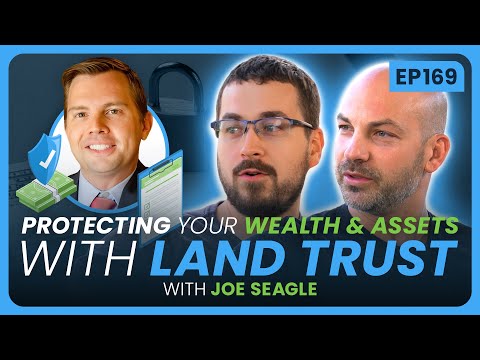 ▶ Watch this episode on YouTube
In this episode
Attorney Joe Seagle of My Land Trustee explains how land trusts keep an owner's name off public property records and why that anonymity discourages lawsuits before they start. He walks through the differences between land trusts, revocable living trusts, LLCs and series LLCs, how lenders and taxes treat each, and the situations where putting a property into a trust can backfire. Mike DeHaan and Dan Austin push him on partnerships, refinancing, cost and what investors outside Florida should do instead.
Key takeaways
- Plaintiffs' attorneys look first at insurance coverage, then at property records; if a search turns up nothing collectible, many cases never get filed. Keeping your name off public records is the point of a land trust.
- Use one land trust per property, like eggs in separate baskets, so a code enforcement violation or a lawsuit on one house doesn't block a refinance or expose the rest of the portfolio.
- Land trusts are disregarded entities for tax purposes: the beneficiary (often a buy-and-hold LLC or a flip LLC) reports the income, so you avoid a separate return for every property.
- In Florida a land trust runs roughly $275 to $600 and can be created in under an hour; an LLC averages about $700 to $750 plus a month's wait and annual filing fees.
- Transferring title can trigger reassessment, loss of homestead or valuation caps, and give an insurance carrier an excuse to drop the policy, so it isn't right for every property, especially heavily mortgaged ones with little equity.
- Land trust statutes mainly exist in Florida, Illinois and Indiana. Elsewhere investors use Wyoming/Delaware/Nevada LLCs, series LLCs (Texas, Illinois, Wyoming) or a parent LLC as sole member of property-level LLCs.
- Fannie Mae and Freddie Mac generally won't lend to a third-party trustee outside Illinois; commercial lenders often prefer land trusts and LLCs because they create a special purpose entity with a single asset.
Show notes
Protecting Your Wealth and Assets with Land Trusts with Joe Seagle
Episode 243
“People should be sued for doing bad, not for doing well.” This motto from today's guest, land trust expert and attorney Joe Seagle, sets the tone for this episode’s deep dive into asset and wealth protection.
It’s an unfortunate reality that successful individuals often become targets for lawsuits, but land trusts can be a strategic tool in safeguarding assets. In this episode, Joe explains how land trusts can offer anonymity and protection for property owners, and what other options are available to real estate investors if land trusts aren’t supported by their state.
Joe also explores different asset protection strategies, providing insights on the risks and tax considerations of land trusts, the differences between land trusts and LLCs, and how to use each to protect your investments.
Tune in to learn about land trusts and if they’re the right way for you to protect your assets!
Topics discussed in this episode:Land trusts and the role of trusteesThe process of hiding assetsAsset protection for joint property ownersLand trusts versus other trustsLending and land trustsCons of land trustsHow land trusts can help real estate investorsThe cost of setting up a land trustTax complexities of land trustsVarying land trust state lawsConnect with Joe Seagle and learn more about services offered at MyLandTrustee here: https://mylandtrustee.com/
Check out the FREE Collecting Keys “Sub To Transactions” Master Class!
Learn how to start your own real estate investing business in the NEW Accelerator program! Sign up for one of 10 spots here: https://www.collectingkeyspodcast.com/launch
If you’re an established investor with money to invest, but not the time, check out the Instant Investor PRO Program! https://www.collectingkeyspodcast.com/store
Check out the NEW Big Dan Energy shirt (and more!) in the Collecting Keys Merch Store: https://store.collectingkeyspodcast.com/
Download the FREE 5-Step Guide To Generating Off Market Leads here: https://www.collectingkeyspodcast.com/free
If you are interested in learning from Dan and Mike to receive coaching and learn how they built their business, head to https://www.instantinvestorprogram.com and see if you are a good fit for the mastermind group!
Collecting Keys Podcast Resources:
Frequently asked questions
What is the difference between a land trust and a revocable living trust?
A revocable living trust is an estate planning tool to avoid probate, and you are usually your own trustee, so it gives little asset protection. A land trust is passive, the trustee only acts on the beneficiary's direction, and a third-party trustee's name appears on the public record instead of yours.
Should I move a property I already own in my own name into a land trust?
Joe Seagle says taking title in the trust from the start is best, but the next best time is now. Most plaintiffs' lawyers don't run full title searches unless a claim has already arisen, and the more time that passes between the transfer and the claim, the better it looks to a court.
Can you get a mortgage on a property held in a land trust?
It depends on the lender. Commercial and investor lenders often will, and Fannie Mae and Freddie Mac have forms for it in Illinois, but in other states the agencies generally won't lend when a third-party trustee holds title.
Taxes, Legal & InsuranceRentals & Cash FlowScaling a Real Estate Business
Transcript
Read the full transcript
Joe Seagle: [0:00] There are lawsuits. Of course, we get sued quite regularly. Code enforcement violations, everything comes to us, so the client's name is not associated with that. So that's, of course, the biggest thing we hide, because it is the biggest thing that most people own that is public record, that everyone can see.
Mike DeHaan: [0:19] Very
Joe Seagle: [0:19] good. So we we keep that their name off of the records for that. Welcome
Speaker 3: [0:26] to the Collecting Keys podcast, the show where you'll learn how to use real estate to create massive income, not just passive income. Real estate doesn't have to be a get rich slow game. Listen to the country's top real estate operators, and you'll have all the tools you need to replace your w two income and go beyond in under twelve months. Ready to take things to the next level? Let's jump in with our hosts, Mike DeHaan and Dan Austin for today's episode of the collecting keys podcast.
Mike DeHaan: [1:02] What is going on guys for today's episode of the collecting keys real estate investing podcast? Go and get your coffee and your caffeine pills because we have we have a deep dive into one of the most, I would say, necessarily complex, but like in the weeds areas of real estate investing. It's very important. Very important. We have Joe Siegel here from Orlando, who's talking to us about land trusts and asset and wealth protection. And I can say without a doubt, this is something that I know you disregard. We disregard it. I know people that own Yeah. Hundreds of properties that don't do what we go into in this. And basically, where it's been left is they are leaving themselves massively exposed to, you know, financial risk if they were to get sued. And honestly, if you're
Dan Austin: [1:54] doing business, not if you get sued, it's when you get sued. Yep. Even us in our little business, we get random lawsuits sent to us. I mean, ambulance chasers, but they're like, oh, we're gonna sue you for using our likeness and stuff like that. And so it's not if it is when and like, it does feel like most investors when you talk to them, including ourselves, you're just walking a tight rope, especially when you talk about liability things and how he dives into showing like, because he used to be a lawyer that would go after people and he said the first thing they would look at is their insurance policies and then beyond that, what assets do they own. So asset protection and hiding the assets, which he talks a lot about is super key to your success long term here so you don't lose your ass.
Mike DeHaan: [2:35] Yeah. Absolutely. And we'll be honest, the episode is a little bit dry, but it is also highly, highly educational. Right? He dropped some stuff in here that I would say is like the most important part of that cursor really real estate infrastructure that you build out for yourself. A lot of the land trusts that he talks about do are specifically for Florida. So that is something to keep in mind, but sort of near I don't know, this end third of the show, we started to talk about these different series LLCs and the way it's set up by self directed IRAs and, like, a bunch of different ways that work nationwide to get the same amount and amenities so that you don't lose all of your stuff to someone that, you know, you get into a car accident with. Right? And that is a very, very real thing that does happen to people. So this is something that you definitely want to listen to, take notes, and take action after you listen to this and try to figure out what you're gonna do next to protect yourself. But anyways, guys, Joe drops his website here at the end of the episode. So absolutely reach out to him. And if you have anyone that you know that owns rental properties and is leaving himself at risk to potentially lose those to a lawsuit or some other sort of litigation issue, make sure that you share this information with them as well. We're a small community real estate investors. Even though we compete, we also should look out for each other and your friends and family and also.
Mike DeHaan: [3:53] But anyways, guys, enjoy the show with Joe Siegel and take some notes. It's a dense one. Alright. Joe Siegel, super excited to have you on the show, man. We are going into a topic that I admittedly have no knowledge about. So I'm super excited to learn along with the rest of the listeners today, because you are an expert in land trusts. And you do a whole bunch of stuff with that you set those up for people, you're the expert on land trust. So I'm super excited to hear all the information you can share with us about those about what you do. But before we dive into those details, maybe give us a little bit of a background about you, kind of how you got into this line of business, and, you know, everything that you've come to learn about the real estate industry that you're excited about.
Joe Seagle: [4:39] Oh, yeah. Sure. Thanks guys, for having me on. I'm really happy to be here today.
Mike DeHaan: [4:43] And
Joe Seagle: [4:45] I'm a lawyer, first and foremost. I'm licensed to practice in DC, North Carolina, South Carolina, and Florida. My main office is based in Florida, in Orlando, and we have land trusts all over the state. So I have my law firm, my law practice, and it sort of focuses on asset protection, especially for entrepreneurs and investors, because I believe that people should be sued for doing bad, not for doing well. That's sort of my motto.
Dan Austin: [5:15] Yeah. That's a good motto. A big part of
Joe Seagle: [5:18] what we do is we help people hide their assets, hide what they have, and if no one can see what you have, then you're typically not a target for them. They're going to search you and see what you've got to see if you're what we call judgment proof before they bother going after you. When I first started practicing law, I was a personal injury attorney and medical malpractice attorney back in the late '90s in North Carolina, and I learned from experience that the first thing we were going for is insurance. We're looking for insurance coverage, liability coverage of some type, and if there was none, we would often tell the client that while they had a case, they had damages. Unfortunately, it was going to be uncollectible, because we would research the defendant and see if they had any homes, to see if they had any major property holdings anywhere. And when we found that they had nothing, we would tell the client that there was no use in wasting their time and energy in pursuing the case against that person. One of the subspecialties that we've come up with is land trusts, and we have a company based in Florida called My Land Trustee that serves as land trustee for real estate investors, celebrities, high net worth individuals all over the state of Florida. We have over 2,000, I think over 2,100 now, properties that we hold in trust for these folks. A lot of YouTube creators. They seem to make a lot of money.
Joe Seagle: [6:59] And then they have warehouses for their merch. So we hold all of that in trust so that in case they tick somebody off because they didn't give them the right cheat code, then we hold their property, and the angry gamers can't find their warehouse and burn it down. Oh, yeah. They can't dox them. They can't come after them in any way. Also, professional athletes for them. But of course, our largest block are real estate investors and private lenders tend to be our largest source of the users of the land trust services that we provide.
Mike DeHaan: [7:41] Yeah. No. It's awesome. That makes sense. It's funny I didn't realize there was such a YouTube presence down in Florida. But I mean, I guess, you know, nice weather. You wanna be able to film twenty four seven, three sixty five. Right?
Joe Seagle: [7:52] Right.
Mike DeHaan: [7:52] So when you say that you you help people hide assets, I guess, what's the general structure of that? You know, obviously, you're the you're the trustee. Is it setting up a bunch of LLCs that you guys are the trustee of? Or, like, what's the general, you know, behind the curtain paperwork and everything look like?
Joe Seagle: [8:08] That's a good question. Of course, in The United States, real estate records are public records. Got it. Meaning that anyone can search them or anyone can see them. The most common way that people search records to see what you may own is by searching the property appraiser's records. And I'm sure investors listening to this, they search property appraiser records all the time to see who owns a property so they can contact them to tell them they want to buy it. I know because I get those texts and calls hundreds of times a week, because we own over 2,000 properties. So we, instead of your name appearing there, we create a land trust under the Florida statutes, in our case, and we are the trustee of the trust. So our name appears on that public record. Our address appears, our phone number, our website, everything that's searchable about that property leads back to us. Now internally, of course, we maintain a copy of the trust agreement that we've created, and that trust agreement is with the beneficiary. Beneficiary is typically the investor, the entrepreneur, the YouTuber, content creator who wants to remain private. And the only person who sees that is us. We're the only ones who know that under the terms of the trust. We don't disclose it to anyone without a subpoena or a legal reason to do so, which does happen from time to time for some of our clients who aren't as top notch as most of them are.
Mike DeHaan: [9:42] Yeah. Drug dealers and all those sort of people that also have warehouses
Joe Seagle: [9:45] Convicted they need to store their bioterrorists, people like that.
Mike DeHaan: [9:49] Yeah. Actually? Is that like an actual thing that Yep.
Dan Austin: [9:53] Yep. Interesting. Yep. That's all I'll say on that.
Joe Seagle: [9:56] So it's not unusual yeah. It's not unusual for us to get the phone calls, to get the junk mail, to get the request for, we want to buy your property. Are you interested in selling it? Also, to get every once in while, there are lawsuits. Of course, we get sued quite regularly. Code enforcement violations, everything comes to us, so the client's name is not associated with that. So that's, of course, the biggest thing we hide because it is the biggest thing that most people own that is public record, that everyone can see. So we keep their name off of the records for that. And of course, for other assets that people may own in other states, we will set up typically Wyoming LLCs, Delaware LLCs, Nevada LLCs, to own those properties, where in other states where they don't have a land trust statute, or they don't have a land trust case law that allows it, like Florida, Indiana, Illinois, those states have that available to them. Most other states simply don't have the statutory or case law framework to allow them to use that. So instead, we
Dan Austin: [11:12] end up doing the LLCs for them. On those LLCs, then, you guys the owner of the LLC? Is that how you hide the actual owner's name?
Joe Seagle: [11:22] In some cases, we have a company that acts as the manager of the LLC. Gotcha. Because in some states, like Florida for instance, at least a manager must appear on the corporate records. That manager's name and address must appear, so we will sometimes act as manager of the LLC, so our name appears. But again, the members, the true owners of the company remain in the background, and we do what they tell us to do. We sign what they tell us to sign, just as we do as trustee. We sign what they tell us to sign when they tell us to sign it. As long as it's not illegal or false, we're happy to do so, and we do that quite often.
Dan Austin: [12:05] Gotcha. Interesting.
Mike DeHaan: [12:06] So so kinda like the whole concept of what you're saying makes sense. So I guess what I always have wondered with, you know, things like this, someone buys a property, you know, five years ago, they buy it in their personal name. It's a rental property, primary residence, whatever. They're going to put it into a land trust. Someone can go and look at the chain of title and see that, you know, Mike DeHaan owned the property and transferred it into a land trust with a quick claim deed or something similar. How do you sort of, like, protect them in that realm where they can, like, literally just sort of, like, see that the previous owner before the land trust was the individual?
Joe Seagle: [12:41] I always go back to that saying that the best time to plant an oak tree was twenty years ago. The next best time to plant the oak tree is today. It's the same way with any asset protection that you may do. Yeah, doing it from the get go would have been the best practice, absolutely. Go ahead and put it in your name, or put it in the land trust name or in the LLC's name from the get go is absolutely the best policy. Fortunately, most plaintiffs or lawyers do not do full title searches to see what you did own. The only time we really see that come into play is if you have been sued already, or a claim has arisen already, and they're going to come after you. They're going to start going, Okay, well we saw that he owned this property, and now he doesn't own this property. So they're going to search back and try to dig into that and try to find it. But if the claim hasn't arisen yet, it's been a year, two, three years since you put it into the LLC, they're not going to see it. They're not going know about it. And better yet, they can't go back and try to get it. So it's not the best practice to take title in your name and then later move it into an LLC or a land trust. However, the next best time to do it is now. Go ahead and get it done.
Joe Seagle: [14:06] Get it out of your name. Get it into the LLC. Get it into the land trust, depending on your jurisdiction, what would work best for you, and and just do it. Yeah. You know? Get it done.
Mike DeHaan: [14:17] Yeah. For people that own properties jointly with, like, other people, is it the same sort of, like, general process? So for example, you know, I own a bunch of rental properties myself. Dan owns rental properties himself. We also joint own rental properties. So I guess the hierarchy of that, is it like we would need to basically have three different land trusts? Like, one for my individual, one for Dan individual, and then we'd have a third one for, like, our joint stuff? Or how does that all come together?
Joe Seagle: [14:49] Well, number one, you'd want a land trust for each property. Okay.
Dan Austin: [14:54] Gotcha. Gotcha.
Joe Seagle: [14:55] Just to so that they're separate from each other. I always treat a land trust like a a basket for eggs, and each egg is a property. So if you drop one basket, only one egg breaks. You're not going to break every egg you have. And the nice thing about land trust is they're fast and easy to set up, and they don't cost as much as an LLC, and you can set one up for each property you have. Typically, we would set up one land trust for a property, and the two of you would be the owners of the beneficial interests at fiftyfifty, or sixtyforty, seventythirty, however you want to break that down inside the land trust. One of the nice things about whether you hold it in a land trust or an LLC, if you're both inside that entity that owns that property, then you're free to move things around, but you don't have to worry about what's called a partition action in the future. If you and Dan own the property together, just in your names, and you get mad at each other, because partners never get mad at each other. But if you do, and you want to break up, there's this action called a partition action, which is a divorce for property owners, where you sue each other, or one sues the other one, saying, I don't want to own this property with you anymore, so I want to split it. The first thing the judge is going to do, he's going to try to split it physically.
Joe Seagle: [16:19] If it's vacant land, let's say you own 100 acres, the judge will say, Fine. Survey a line down the middle of it, you get 50, you get 50 acres, and we move on. But if it's a house, you can't draw a line down the middle of the house and break it in half. So in that case, what you end up doing is the judge orders the property to be sold at a fire sale. And the house is sold. The investors who are bidding know that this is a a distressed sale, so they're gonna the vultures will circle. They'll spend as little as possible to buy it, and then you split whatever is left over after the lawsuit, and the broker's fees, and court fees, and everything else are paid on this lower price. But if the property's inside an LLC or inside of a land trust, then that is not available at all to you. The partition action is not available to you, so you can't do that.
Mike DeHaan: [17:15] That's interesting. So as I got partnership, especially if you're one that probably has a little bit lower leverage, it'd be very beneficial for you to set up a land trust. Right. So like I so that question was kind of spurred. There's this huge trend right now, especially with younger people where they're just trying to, like, ride on the coattails of bigger investors. Right? And they're like, you know, I've met so many people that are like, I own all these properties, but they're all partnerships. And they're all with different people, and it's all because their dad has a bunch of rich friends that loop them into different properties. Right? And I imagine if they wanted to have any sort of anonymity with this via land trust, it would be an absolute freaking nightmare, but it might be beneficial if you can get people, you know, talked to doing it. Right.
Joe Seagle: [17:57] Well and let's take that on the flip side. I would say if you're the rich uncle, you're the rich friend, I wouldn't want to bring in nephew or niece and say, Okay, well fine, come on into this deal and own this with me, and we'll just put your name on the deed with me, because you've just handed them the keys to that property divorce of partition to sue you. Even if they only have 1% or 5%, they can bring this up and make your life awful until they get what they want So out of what you do instead is you do either the LLC or the land trust and say, Look, you're going to buy into this, and you're going to be an active participant. I'm going to expect you to do X, Y, Z at least, at the least, with this property. If it's nothing more than you have to show up at the property at least three times a week to check the status of the rehab, whatever you may come up with for them to do. But if you don't do what you're supposed to do, I'm the majority beneficiary if it's a land trust, or I'm the majority member if it's an LLC, and I can kick you out and move on with my life, and you're done. You're out. Amen. So really, I mean, that's the way I would look at it. More, it really protects those seasoned, more established and wealthy investors than the younger investor.
Joe Seagle: [19:23] But by the same token, the younger investor is in there and can say, Okay, well, I'm going to learn. It's going to be a mentorship opportunity for me to learn, but it protects both sides inside this, whether it's an LLC or a land trust.
Mike DeHaan: [19:39] Yeah. Yeah, that makes sense. I'm kind
Dan Austin: [19:41] of thinking as you're saying, you're talking through this process, what would be the difference between a land trust and something like you would hear like or revocable trust that you hear people putting together to put assets in, for similar asset protection, is there a main difference or a point that you would discuss about that?
Joe Seagle: [20:00] Yeah, there's a big difference between revocable living trust, irrevocable trusts, a land trust. When a lot of people are looking at land trusts in other states, what they're really talking about is a stripped down revocable living trust. In most states, revocable living trusts are used for estate planning to avoid probate. Everything is titled into the trust so that when you die or you become incapacitated, that trustee already exists, the trust already exists, and that person or trust company, whoever it may be, will then step in and distribute your assets according to the trust without it having to go to court, without a judge having to So pay it's faster and cheaper on the back end, but you typically pay more on the front end, so it of it evens out a little bit. Sure. But the big thing there is that the trustee in a revocable living trust has a duty to ensure that the property remains profitable. In a lot of states, they have what's called the reasonably prudent trustee, reasonably prudent person standard, that that trustee has to make at least a 3% return in some states on the assets that are held in the trust. So a lot of trustees will go, okay, well, we're going to sell all the real estate really fast, convert it to cash, put it in the stock market, and I'm safe. I don't have to worry about it. Land trust is a lot more passive.
Joe Seagle: [21:38] The trustee only acts with of the beneficiaries, or a person who may be called the holder of the power of direction, and that person will, if there's multiple beneficiaries, a lot of times they'll appoint one person who tells the trustee what to do, and that way the trustee only has to talk to this one person instead of corralling the cats, so to speak, and trying to get them to tell the trustee what to do. But the revocable living trust is great to use to avoid probate, but not so much for asset protection, because your name is typically the trustee. You're typically your own trustee as well, at least initially. And it doesn't really give you much asset protection. Now there are trusts out there called domestic asset protection trusts, and about 40 states have passed laws that allow domestic asset protection trusts. Those are sort of outside the scope of this conversation today, but we're starting to see those more and more. They're starting to take the place of what were offshore trusts, where you would send your money to the Isle Of Man or the Canary Islands or wherever, and a trustee would be there and manage that money for you, and all you got was income. But those, they got to be so prevalent that 40 states so far have passed statutes to allow some form of that and still provide protection. This is one of the big things I read about. A lot of people go, Well, it's not fair for somebody to be able to hide their wealth.
Joe Seagle: [23:22] It's not fair for somebody to be able to protect their wealth. And I'd go, Well, if you're going to take that tack, then let's just get rid of corporations and LLCs and trusts altogether, and everybody shall hold everything simply in their individual name. I mean, that would be really rocking a boat. But again, whether you put it in as soon as you buy the property at the inception or whether you put it in after the fact, it all comes down to when you did it in relation to when you get sued, and when the claim arises. The more time that passes between that date of when you put it in the trust, or when you put it in the LLC, and the date that the claim arises, that helps. More and more time just makes it look better for a court later that you haven't just tried to hide something. And also, again, if you're involved in criminal activity, the court's not going to really let you hide anything anyway, anywhere.
Mike DeHaan: [24:25] Right. So
Joe Seagle: [24:26] if you're if it's just civil, though, typically, methods work just fine to keep the assets from being taken by your creditors.
Mike DeHaan: [24:35] Yeah. That makes sense. Okay. How does having, like, your properties in land trust because a land trust is on title. Right? How does that affect lending? So for example, people wanna refinance their property. Can the Lantros actually get a loan, or do you need to transfer title back to the individual to get the loan, or to an LLC to get the loan?
Joe Seagle: [24:55] That's a good question. We get that a lot, and it depends on the lender. In fact, I just signed documents before I came in here today for a gentleman who we hold his home in a land trust, and I signed some of the documents for the loan for the refinance, and he's going to sign the rest of them. He signs the promissory note and everything else. So that lender's fine with it. Usually you are going to be with a commercial lender more so than a Fannie Mae or Freddie Mac lender. In Illinois, where land trusts are extremely prevalent, almost everybody owns everything in a land trust, Fannie Mae and Freddie Mac have developed their forms to work with that. Unfortunately, Florida, they have not. And also, if it's in an LLC or a corporation, of course, Fannie Mae and Freddie Mac will not lend to anyone but a human being in 49 other states. Unless it is, like we said, a revocable living trust, they will they have forms for that as well. It's just when it's held by a third party trustee that they just can't handle it. They can't do it, except in Illinois. But most parts, it's going to depend on the lender. Like I said, we've got a lot of commercial lenders who will lend to a land trust, will lend to an LLC, especially for investors. There are quite a few of them out there.
Joe Seagle: [26:27] In Florida at least, a lot of the commercial lenders who work with investors are very happy to have the property held in either an LLC or a land trust, because then they know it's what we call a special purpose entity. It's just that's the only asset that that entity owns, so if they go to foreclose, they don't have to really worry about lots of other judgment creditors out there they're going to have to find and serve in their foreclosure. It makes their life a
Dan Austin: [26:56] little bit easier. Interesting. So is there anybody, as we're talking about all these situations, is there anyone that these aren't good for to have a land trust? Is there a reason why somebody wouldn't want to put their property, whether it's a single family home, a commercial property, or just a life circumstance?
Joe Seagle: [27:12] Sometimes the land trust doesn't work well if the client is not familiar with it. So, we find a lot of time is spent educating how this is going to work. A lot of people have heard about it. They think, Oh, that'd be great. So we actually have an email we send out that says, They are great. However, here's six or eight reasons why you may not want to do it. In Florida and in a lot of states, anytime there's a change of title, that is a reassessment period. The property appraiser can any caps that are on the valuation, any exemptions you may have, all disappear, and all of a sudden the property is taxed at almost market value, so your taxes go up. Typically, if someone has owned a property for a very long time in a certain name, we will check before we recommend changing title because that can In screw you Florida, we're having a real issue with insurance, which I believe we're just the first domino to fall in the country. Texas and Louisiana and lots of other states are starting to have problems with insurance in general. So it's going to be what you're seeing in Florida is just the beginning of what you're going to start seeing everywhere else, especially if you have wildfires, tornadoes, anything. The weather's just getting wacky, so it's getting tougher and tougher to get insurance. So anytime there's a change in title, the insurance company looks at that as a reason to go, Ah, we can drop you. We can terminate your insurance because we no longer write new policies, and this would be considered to be a new policy for you So in a it's a case by case basis that we talk to the client very carefully about their situation before we say, Yeah, let's just throw it into an LLC. Let's just throw it into a land trust.
Joe Seagle: [29:18] Also, if you've got a very large mortgage on the property with very little equity, a lot of times we'll say, Just leave it. Nobody's going to want to touch that property anyway because there's not enough value in it to bother. You've taken the cash out and spent it elsewhere, so we won't bother with that either. So there are certain situations where we will say it's just not worth it. The cons outweigh the pros sometimes. Yeah. Definitely.
Mike DeHaan: [29:48] Do you have a follow-up, Dan? Talking about speak?
Joe Seagle: [29:50] No. I was just going
Dan Austin: [29:51] to say I appreciate you saying that because it seems like in this world, when you're a hammer, everything's a nail, and there's people that say, Well, we do land trusts. Everybody, it's right for everybody, even though in some cases it might not be.
Mike DeHaan: [30:03] Yeah, right.
Joe Seagle: [30:04] Well, and that's the thing too. Being a company that's owned by an attorney like myself, attorneys, we have it beaten in our head. We have to do what's best for the client, not what's best for us.
Mike DeHaan: [30:15] So
Joe Seagle: [30:16] we will look at things, and there are many times I give advice. I do consultations all the time by Zoom, and probably about 30% of the time the advice is, Stay pat. Where you are is just fine. I would love for you to spend more money with me, but it would be a waste of your money and could actually be detrimental if you do this. And we've unfortunately been called on. We have to fix problems sometimes that other trustees or other lawyers who aren't as familiar with this, they jump in and they say, Oh, well, can find the format of a book and just do it. And they'll just do it, And then all of a sudden, mom has lost her homestead. The property's now being reassessed at three times the value it was being assessed at, and all the exemptions So are property taxes just went from $500 a year to $8,000 a year overnight because the hammer saw a nail and hit
Mike DeHaan: [31:13] it. And
Joe Seagle: [31:15] I agree with you. I see that from all kinds of attorneys. If you're a slip and fall attorney, well, let's find a slip and fall way that we can wrap this in somehow.
Mike DeHaan: [31:25] It's Yeah.
Joe Seagle: [31:25] It's very common that everybody tries to make it fit to their practice area.
Mike DeHaan: [31:29] Right. Yeah. And that's just like a whole thing too where there's most consumers out there. They don't understand that there are different kinds of lawyers. Right? They're like, oh, I know my Jimmy's a lawyer, my nephew, you know, I've talked to him. He's like, well, he's like a criminal attorney. He's not really gonna be able to help you figure out your your land trust. Right? Yeah. So I guess at what point along an investor's journey, or is it what scale should they be at when they start looking at, you know, potentially setting up land trust? Is something they should deal with, like, property number one, or should they have a certain income, a certain portfolio size, certain number
Joe Seagle: [32:01] of assets? That's a good question. Again, it comes in in the consultations all the time. One of the first questions I ask any investor, especially if they're a new investor, I go, Well, what do you do for your day job? Well, I'm a nurse practitioner. Oh, I'm a dentist. I'm a doctor. Oh, okay. Well, then from the get go, we need to start protecting you because you are in a high risk profession, that you will most likely be sued on a regular basis, and we need to make sure that all of your other assets that you have are separated away from you as much as possible so that no one can touch those should something go horribly awry that exceeds your malpractice coverage, which it does happen sometimes. Then beyond that, I look at how much experience do you have. We actually have a new investor consultation that I'll do with new investors, where we'll talk with them just to see where they stand, what their other jobs are, what their risks are, and what they own. What scares me are the seasoned investors who come in, and hey, I've got 47 houses, and I own all of them in my one company. Some of them I flip, some of them I buy and hold, and I'm sitting there The tax issues are coming in, number one. I'm sitting there thinking of the tax problems he's going to but then I also start thinking about all the liability issues. One of the questions I always ask, I go, Well, have you ever had a code enforcement violation against any of these properties?
Joe Seagle: [33:38] Oh, yeah, all the time. I go, Well, have you ever tried to refinance one of the other properties when you had a code enforcement violation against another property? Yeah. And I said, And how'd that go? Well, I had to fix the code enforcement violation. It was $40,000 I had to fix the code enforcement violation before I could refinance. I go, That's the reason you should have all of these in separate baskets, away from each other and away from you. So we'll dig into those and get those going. Really, it's any kind of investor, especially real estate investors. From the beginning, they should at least be educated and know that land trusts exist, know what LLCs are and how they exist and how they can be used. Investors should understand the difference between a dealer and a non dealer for tax purposes, because I talk to a lot of investors who go, Well, I do some rehab and flips, and I do some buy and holds, I do some wholesaling. I go, And you're doing them all under the same entity? Oh, no. I just do it all in my name. That's a problem. That's a big problem from a tax perspective. And I go into all that with them. So really, from new investors up, but typically who we find get the best use out of our services is anyone who's got 2,500,000 of positive equity and above. And the reason I say $2,500,000 is because most of our clients carry $500,000 minimum liability insurance on their car. That's your number one target that's going to put a target on your back.
Joe Seagle: [35:28] You have a wreck, number one. And then a lot of them carry a $2,000,000 umbrella policy. So there's $2,500,000 worth of insurance that will cover probably their biggest liability, which will be a car crash. The more houses you own, though, and hold, the more liability risk you have with ADA violations and fair housing, and we're starting to see a huge rise in that from tenants coming after landlords for fair housing violation and ADA violations, especially if anything you happen to own is commercial ADA. There are law firms out there. That's how they make their living. They have the boilerplate federal complaint. They're going to file it against you for not being compliant as a public accommodation. For tenants in residences, they have the same they have complaints for that, ready to go. I can tell you right now, those are all federal cases, and if you're sued in federal court, you need to go ahead and set aside $25,000 immediately just to get your answer filed and a little bit of discovery done. Dollars 25,000, that's where it starts when you hit federal court, and then it goes up from there. Most federal cases, or any state case that goes all the way to the Supreme Court of the state, you're looking at around a $250,000 in legal fees and court costs alone, and expert witness fees and all
Dan Austin: [37:01] that, at least. That's crazy. That sounds terrible.
Joe Seagle: [37:04] So the best thing you plan does not look like a target, where anyone looks at you and you go, Well, this is all they got. There's no insurance, or there is insurance, but it's the minimums, so why bother? Why are we going to even bother going after this person? They don't realize that you have 47 properties or 147 properties. They just see this one in this one land trust, and it's done. Also for rehabbers, we've had people do rehabs, and six months after closing, I get the phone call as the trustee that sold the property saying, Hey, you didn't disclose that there had been termite damage. You didn't disclose that the septic tank didn't work. You didn't disclose that the house was about to fall off the side of the hill. And I go, Well, that's fine. You can sue us. We are the trustee, and the only asset we ever had was the house that you're sitting in. Good luck. You get a judgment, but it's not going to be worth anything. Rehabbers especially, having them in their own pod, their own basket that gets sold and it's empty and there's no eggs left, that's the best route you can take if it's available to you.
Mike DeHaan: [38:13] Yeah. That's interesting. It's like same concept as a personal security system for your house. Right? The point is not to catch the criminals. It's to stop the criminals from inquiring your house in the first place. Right. So no. That that's very cool. And so I guess just so people have context, you mentioned briefly before that they're cheaper than LLCs. What does it typically take to set up one of these land trusts?
Joe Seagle: [38:35] Well, for instance, in Florida, it's going to be between $275 and $600 at the inception, depending on how much involvement we need to be involved with, and what you're trying to do. For instance, in Florida, you can hide the purchase price at the closing, so it doesn't even appear on the records as to how much you paid for it. That's a little extra. If you want to have successor beneficiaries built into the trust so that when you die as the beneficiary, it automatically passes to someone, sort of like a revocable living trust does, that's a little bit extra. If the title company we're working with has no clue what they're talking about or what they're doing, we may charge a little extra to deal with them because you're working with a title company that's clueless and ignorant about how it works. And then of course, just to set up. But again, two seventy five to 600 is what you're looking at to set it up and get it going. For LLCs, typically with filing fees, you're looking well, you can always go on LegalZoom, somewhere like that. $99 they'll set it up for you. I still don't know how they do that, including the filing fees, when the filing fee is 150, but somehow they do that, but then they add on, add on, add on.
Joe Seagle: [39:58] So the average price, I believe, last I saw for setting up an LLC, including attorney's fees, including the filing fees, is about $700 to $750 So it is a little bit faster, a little bit cheaper to do the land trust. But the biggest thing is, in Florida at least, it takes about a week to a month to get an LLC set up with the state, to get it registered with the state, depending on the time of year. Early in the year, it's about a month. Late in year, it's about a week. In other states, that may be a day or two. With a land trust, it's just how fast we can kick it out, and if it's an emergency, it's within the hour. We can set up trust within an hour, and it's done. It's ready to go.
Mike DeHaan: [40:43] That's crazy. And are there kind of like tax complexities that come with a land trust? Because that's a big thing with LLCs, is now you have to report them all separately on your tax returns. You have to do the same with land trusts?
Joe Seagle: [40:55] The land trust is a completely disregarded entity for tax purposes. It's sort of like a single member The IRS just disregards it and pays no attention to it. So whatever the beneficiary's tax situation is will be the tax situation there. So this is why a lot of people, a lot of our clients will set up one LLC for their buy and holds, one LLC for their flips, and then depending on what they're planning to do with the property, that LLC will be the beneficiary, but they use a different land trust for each property, and then it just passes through straight to those. And then when we sell the property, we fill out the ten ninety nine information with the beneficiary's information, so it all gets reported straight on the beneficiary rather than on the trust, because the trust is not a separate entity unto itself. The beneficiaries are the taxpayer as far as the IRS is concerned.
Mike DeHaan: [41:49] Yeah. And that's huge, right? And that's something that people listening, I want to really emphasize how massive as he just said. Because like, you're you're talking about, you know, the people with all these properties, like, well, see, you know, you're kinda rolling your eyes. I'm sitting here feeling like I got my hand I got caught with my hand in the cookie jar because I'm looking at Dan. I'm like, uh-oh. I saw this after we but the big reason is because setting up all these LLCs is a pain in the ass, takes a while, it's expensive, and then our taxes are a freaking nightmare.
Joe Seagle: [42:17] Right. Because I know, I mean, for myself, I know my CPA charges more to do a corporate return or an LLC partnership or even a pass through return more than the individual return. I don't know why, it just works out that way. But only other analogous structure I can think of that's very similar to how a land trust works in Florida or in Illinois or Indiana would be the Series LLC.
Mike DeHaan: [42:47] And
Joe Seagle: [42:48] just a few states have it. Know Illinois has it. Texas has it. I believe Wyoming has it. But Series LLC works much the same way, where you set up one master LLC, and then you we've done it in Texas before. And then each house is owned in a separate LLC, but it's really just a series LLC that is a DBA of the main mothership LLC. And everything flows through up to the mothership. Another thing you can do, of course, with LLCs, but again, you're having to set up a separate LLC in states that don't have the series LLC, in states that don't have the land trust. You're setting up one LLC that acts as the member of all of your other LLCs, but you're still paying that filing fee, an annual tax fee or annual report fee for every year for every LLC you set up to own each individual property. And the only place I've ever seen where that really works out is for large developers, somebody who's a developer who may build an apartment complex. They'll have an LLC that only does that condo complex or that apartment complex or that office building, but it's owned by it's a wholly owned subsidiary of another LLC. That way, when it's sold out, that LLC is chucked. It's done and gone. But again, it's expensive to maintain and have that LLC there. Also, lot of our clients do private placement memos for fundraisers, for buying multifamily properties, and those, of course, are an LLC creation with special operating agreements for the private memorandum that's put out there for the investors.
Joe Seagle: [44:32] However, we have actually had those PMM syndication LLCs, and what they'll do is they'll go out they'll buy multiple properties, but they buy each one in either, depending on what they plan to do with it, in a land trust or in another LLC that's wholly owned by the syndication LLC. But all of that, again, is to separate those properties from each other and away directly from the syndication LLC. Another one that's a pretty advanced technique, of course, are self directed IRA holders and beneficiaries. We have a lot of those. We work with a lot of self directed IRA custodians all over the country, and those we always recommend do not hold the property directly in your self directed IRA. Have your self directed IRA be the beneficiary of a land trust that owns the property, or set up a checkbook control IRA LLC, and have that company buy the real estate inside of other LLCs, depending on the state, or inside of land trusts, depending on the jurisdiction and what's available to them.
Mike DeHaan: [45:42] Yeah. That's awesome. That's fascinating. Yeah. There's so many different options, and I appreciate you sharing all this. You said that you're licensed in a handful of states, but do you work, does that mean you only work with property owners that own properties in those states?
Joe Seagle: [45:55] Yes. Well, and for land trusts, we're restricted only to Florida at this point, because Florida has the statute, and that I've helped Gotcha. The last two amendments that that statute has gone through, I've been on the committee for the bar that's helped write those. Okay. So that was a hoot. But we stick to Florida. Some states, like Texas, for example, to be a trustee of land trust, you pretty much have to be a bank, and we're just not going go through that brain damage to do that. So a lot of other states where land trusts may be used unofficially, there's a lot of workarounds you have to work with to try to make it work. What I think would be great is if more investors would lobby their legislatures to pass the Uniform Land Trust Act, because there's one out there that's been written. It's just never most states just never get around to passing it, but I think if a lot of real estate investors got behind it and said, Look, it's happening. People are doing it anyway, and we need a statute that regulates it and says, Fine, if you're going to do it, this is exactly how it'll work, and this is how it'll be treated. And I think that would solve a lot of problems in a lot of states for a lot of investors, to make buying and selling properties faster and easier and cheaper for them. Yeah. So I guess for us,
Mike DeHaan: [47:17] being in Washington State, out of the different stuff that you outlined, what do you think would be the best option for us to pursue?
Joe Seagle: [47:26] If Washington State allowed land trusts, I'd say land trusts. If they don't allow land trusts, but they allow series LLCs, I would start using series LLCs, looking at statute, making sure it's right. And if not, because they don't allow that, then you're stuck with forming an LLC, but have it as a pass through LLC, and have your two LLCs, your buy and hold LLC, and your flipping LLC, your dealer LLC, and have it be the sole member of all of those. Unfortunately, you're not probably going to get the anonymity, but you may not want to be too anonymous with your property holdings if it's you, because then anyone can step into any title company and say, Well, here's some more articles, and here's the operating agreement, and I'll sign an affidavit saying, I'm the manager, and I'm the owner, and I'm going to mortgage this property, or I'm going to sell this property. And if you're so anonymous that they can't really check the records and double check that what they're telling them is true, somebody could, in effect, steal your property that way. So that's one of the reasons we also push the third party trustee, because if we're the trustee for your land trust, everybody can find us, and it's not too anonymous that anyone can just walk in and say, Hey, I'm my land trustee. I'm here to sell this property. Every title company can look us up and go, Well, we're going to call the number and we're going talk to the people at the office who we know are really them before we allow you to mortgage or sell this property or lease it.
Mike DeHaan: [49:02] Right. So that makes sense. Awesome. Well, Joe, I really appreciate you coming on the show, man. There's a ton of incredible information in there. And, guys, I recommend you listeners go and give this one another listen through because he drops an insane amount of knowledge in a very short period of time. And also too, I've learned that I need to do a little bit of reflection and figure out probably our Yeah. Our anonymity and our security Yeah. Here a little But awesome, Joe. If people wanted to find you, follow you, reach out to you, what's the best way for them to do so?
Joe Seagle: [49:33] Best way is just go to our site, mylandtrustee.com, and that has all of our information, lots of links, lots of media and information. Just tons and tons of information right there.
Mike DeHaan: [49:48] Easy enough. And I know we got a lot of Florida listeners,
Dan Austin: [49:51] and we got a lot
Mike DeHaan: [49:51] of Florida, I guess, partners and members of our instant investor program as well. So you guys should definitely reach out to Joe because he's gonna make sure that you guys are taken care of. So, well, thanks so much, man, for coming on the show. We appreciate it, and thanks for listening, everybody. We'll talk to y'all next week.
Speaker 3: [50:06] Thanks for listening to collecting keys. Drop us a five star review on iTunes and send us a screenshot to Mike@collectingkeys.com for your chance to receive a free collecting keys t shirt.
Transcript generated automatically and may contain errors.
Related episodes
Crazy AirBNB Squatters & Eviction Need to Know Rules
Dan Austin hosts a solo Friday Focus answering a listener question about evictions, prompted by viral stories of non-paying tenants and Airbnb guests who won't leave. He explains the…
Co-Living & Cash Flow: A Game-Changing Real Estate Investment Strategy with Sam Wegert
Sam Wegert explains how he converts single-family houses into co-living rentals with up to 10 rooms, and why the numbers beat traditional rentals. He walks through room-count formulas…
What Is The Best Portfolio Structure for Early Financial Freedom?
Mike DeHaan answers a listener question about the best portfolio structure for early financial freedom and argues the premise is wrong: chasing passive cash flow is the slow route. He…
Taxes Taxes Taxes & How to Avoid Them
Dan Austin hosts a solo Friday Focus walking through the main tax tools available to real estate investors: operating expenses versus capital expenditures, straight-line and accelerated…